



This article by Stephen Gilburt was first published by The Enfield Society in newsletter 241 (Spring 2026).
Southgate is first recorded in 1373 when it was in the western part of the parish and manor of Edmonton. The name refers to the south gate of Enfield Chase. This became a royal hunting ground, but it was enclosed following an Act of Parliament in 1777.
The High Street links Southgate Green (see newsletter 219 Autumn 2020) to Southgate Circus (see newsletter 209 Spring 2018). The Southgate Green conservation area extends into the High Street. It still has some Georgian houses, including Southgate House (see newsletter 230 Summer 2023). There are however many later developments including the terracotta trimmed semi-circle of shops at the entrance to the Meadway estate which was built in the 1920s and 1930s (see newsletter 196 Winter 2014).

Picture 1. Locally listed 5 and 7 High Street are a pair of 18th century cottages. The roof is tiled and the walls are rough cast. The sash windows to No 7 have decorative gothic arch glazing bars to the upper sash. [Credit: The Enfield Society]
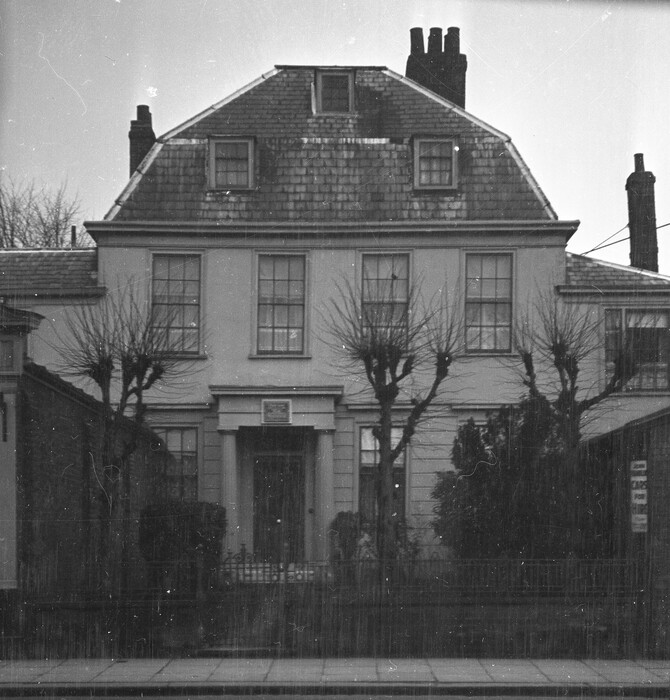
Picture 2. The preacher Isaac Hunt lived at Eagle Hall from about 1783 and established a school in the house. He was also employed by the Duke of Chandos, who lived at nearby Minchenden House, as tutor to his nephew Mr Leigh. Eagle Hall was extended and repaired in 1829 and the school continued in existence until about 1870. Following bomb damage in 1841 the 200-year-old building was demolished, and Southgate Reform Synagogue was later built on the site. There is now a plaque on the High Street.
Isaac Hunt’s son the poet, novelist, playwright, essayist, and critic James Henry Leigh Hunt (1784–1859) was born at Eagle Hall and lived there until he went to Christ’s Hospital Bluecoat school at the age of eight. He left at the age of 15, by which time his parents had moved away from Eagle Hall. In his 1850 autobiography Leigh Hunt wrote: “It is a pleasure to me to know that I was born in so sweet a village as Southgate… a scene of trees and meadows, of ‘greenery’ and nestling cottages… It is a place lying out of the way of innovation, therefore it has the pure sweet air of antiquity about it”.
Charles Dickens based the unlovable character of Harold Skimpole in Bleak House on Hunt, but later apologised to him. Henry Crabb Robinson wrote: “He loves everything, he catches the sunny side of everything and, except that he has a few polemical antipathies, finds everything beautiful.”
Hunt’s publications included Lord Byron and of his contemporaries (1828), Christianism (1833), and Poetical works (1844). Jenny kissed me is his best known poem. [Credit: Enfield Local Studies & Archive]
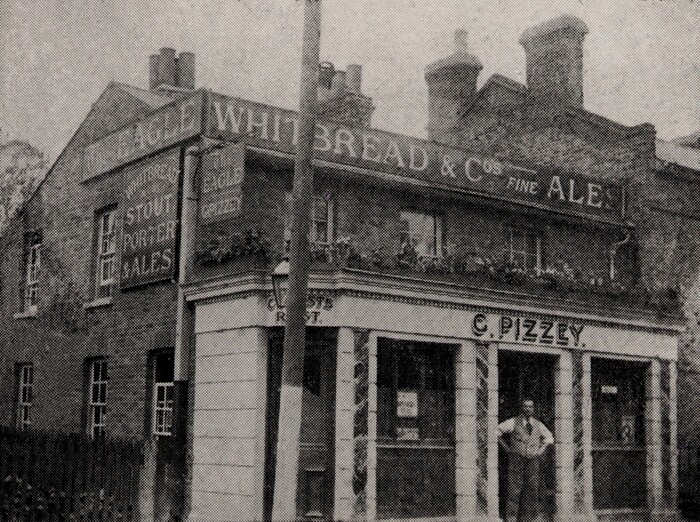
Picture 3. The Eagle stood opposite the entrance to what became Meadway. It was originally a cottage before becoming a beer house in 1865. In 1894 the licensee was George Pizzey. He added a single storey frontage with two entrances and flowers on the flat roof. This view shows George Pizzey at the entrance in 1911. The building later became a shop. [Credit: Enfield Local Studies & Archive]
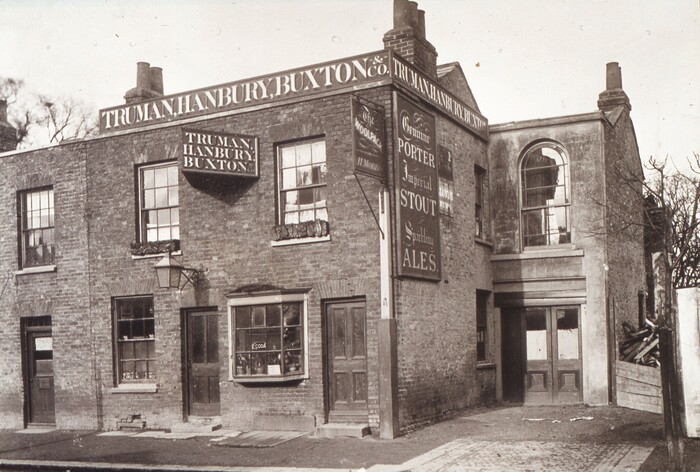
Picture 4. The Woolpack on the east side of the High Street is first recorded in 1707. It included a long room, back room, tap room, back parlour, front parlour, wash house, cellar, and bar. In 1833 there were also a pastry cookshop, stables, outhouses, and gardens. This picture shows the Woolpack in 1908 before it was rebuilt in 1909. The new three storey building had a bay on the ground floor with a bottle and jug room, two public bars, saloon, tap room and skittle alley. Various alterations were made in 1929, 1947, 1953, 1961, 1965 and 1984. [Credit: Enfield Local Studies & Archive]
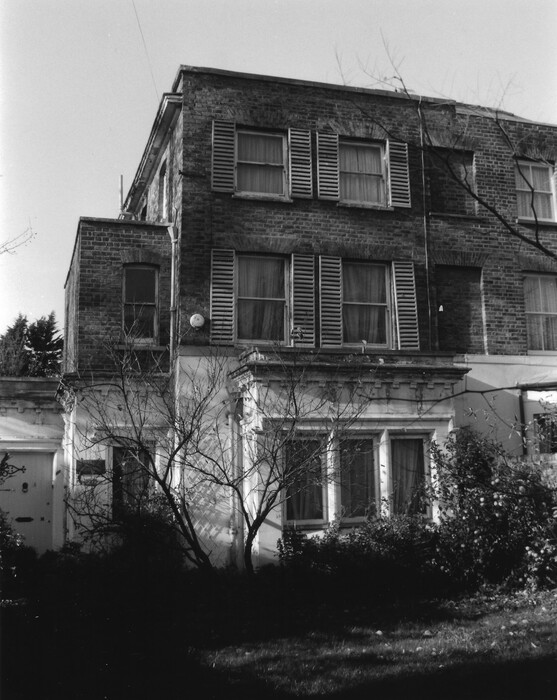
Picture 5. Grade II listed 18th century 107 and 109 High Street is an altered three storey five bay building of stock brick with blind central windows and a hipped slate roof. The sash windows are late 19th century. The stuccoed ground floor has 19th century bay windows. Both houses have several extensions. [Credit: The Enfield Society]
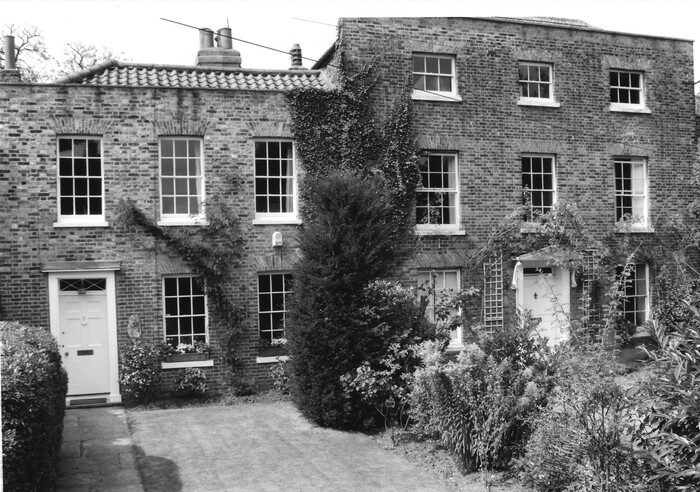
Picture 6. Grade II listed Croft Cottage No 111, Holcombe House No 113 together with Avington No 115 (not illustrated) were built around 1800 in stock brick. The central three storey block and two storey side blocks have sash windows with glazing bars, parapet fronts, and hipped roofs. No 111 has old pantiles, No 113 modern pantiles and No 115 modern tiles. The reeded door cases have cornice hoods. [Credit: The Enfield Society]
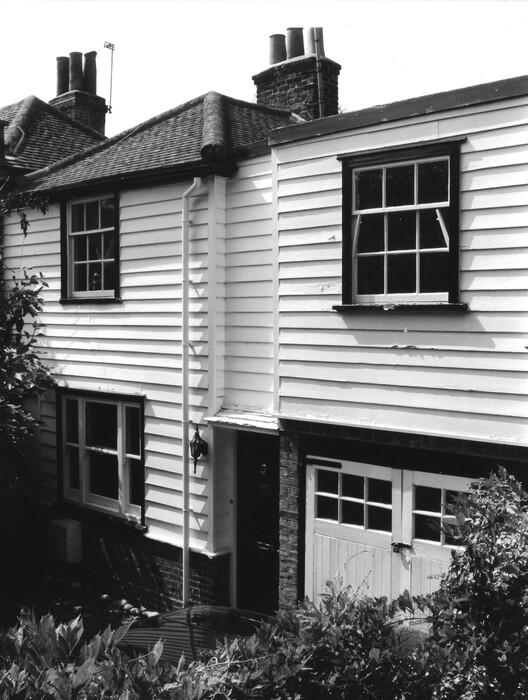
Picture 7. Grade II listed 19th century Avington Cottage No 117 is a two storey weatherboarded structure which may have been a stable block. The left section has a low pitched hipped roof. The first floor sash windows have glazing bars. [Credit: The Enfield Society]
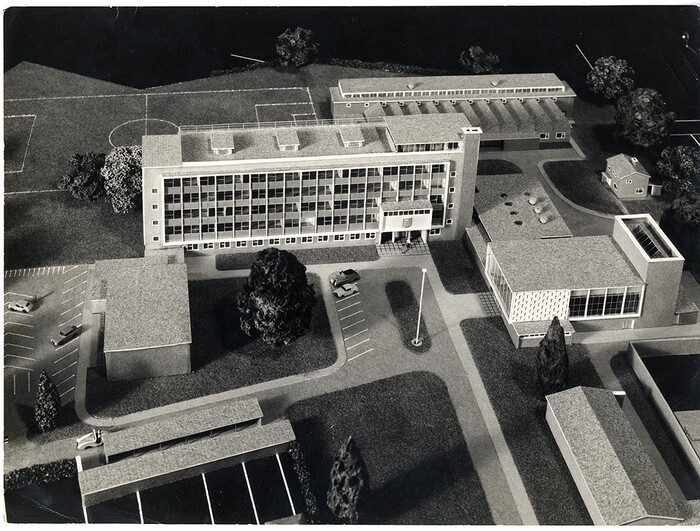
Picture 8. In 1949 Middlesex County Council proposed to build Southgate Technical College, seen here in a model, on the site of 107–117 High Street. However, those buildings were spared, and it was eventually built further north in 1962–3 and set back from the High Street so that it does not dominate the older buildings. It was extended in 1969–71. [Credit: Enfield Local Studies & Archive]
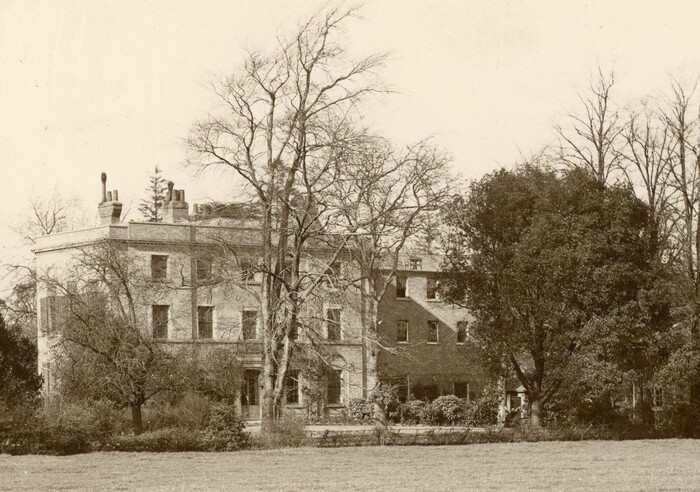
Picture 9. In the 1850s and 1860s Mayfield House was the home of Sir Robert Lowe, the Chancellor of the Exchequer, and later Viscount Sherbrooke the Home Secretary. From 1896 his sisters ran a “high class exclusive school for young ladies that gained a high reputation.” It was demolished in 1920 and replaced by buildings in Mayfield Avenue and The Close. [Credit: Enfield Local Studies & Archive]
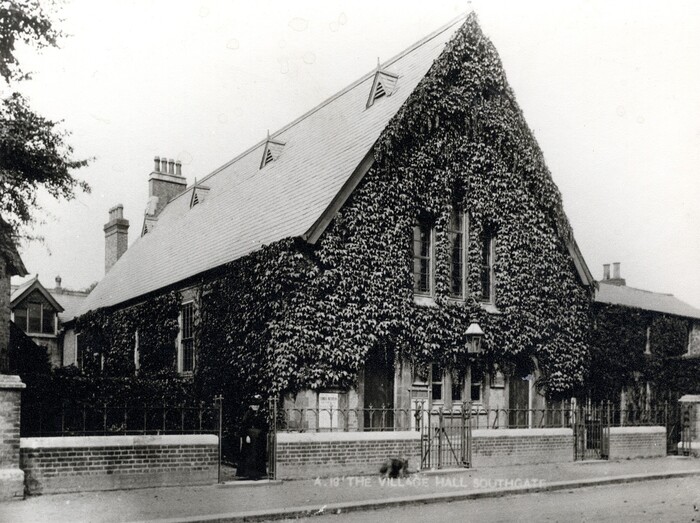
Picture 10. Southgate Village Hall was built in 1881 to a design by Arthur Barker. It was paid for by Anna Baird wife of the local vicar Rev James Baird. It was demolished in 1958. [Credit: Enfield Local Studies & Archive]
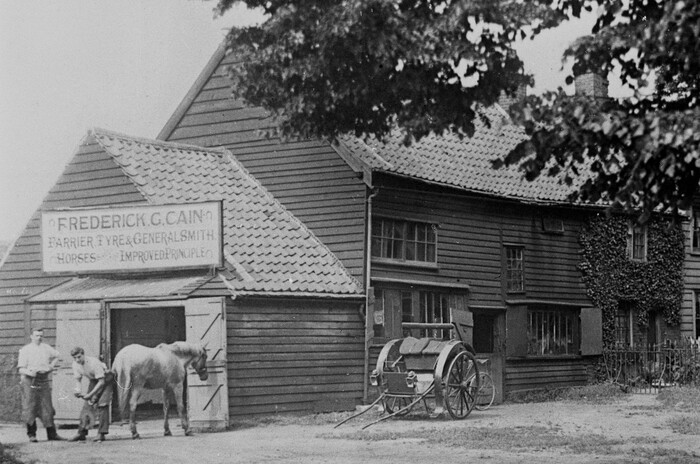
Picture 11. This 1910 view shows Southgate smithy which was in existence for 300 years. William J. Cain was described on the board as a gas and hot water engineer, locksmith, bell-hanger, and farrier with horses “shod on the improved principle”. It was demolished in 1931 for the construction of Southgate underground station. [Credit: Enfield Local Studies & Archive]
Further reading
Southgate and Edmonton Past by Graham Dalling 1996.
Treasures of Enfield, Discovering the Buildings of a London Borough edited by Valerie Carter EPS 2000.
A-Z of Enfield Pubs Part 2 by Gary Boudier 2002.
The Buildings of England, London 4 North by Bridget Cherry and Nikolaus Pevsner 1998.
Britain in old photographs The Old Borough of Southgate by Alan Dumayne 1998.
Southgate a glimpse into the past by Alan Dumayne 1987.